Types of Pool Tables: A Guide to Every Major Style
Quick answer: The main types of pool tables are sorted by playing surface (slate or non-slate), by size and use (home tables, bar box tables, and tournament tables), and by the game they're built for (pool, snooker, carom, and English pool). Specialty types include convertible dining pool tables, outdoor pool tables, and coin-operated tables. For most homes, a 7- or 8-foot slate table is the most common choice because it plays consistently and holds up for decades.
Shopping for a table, or trying to figure out what you already own, gets confusing fast. Sellers use terms like bar box, regulation, MDF, and three-piece slate without much explanation. This guide breaks down each type in plain language, along with what it means for setup, moving, and long-term care.
Pool Table Types at a Glance
| Type | Playing Surface | Common Sizes | Typical Use |
|---|---|---|---|
| Slate home table | Slate | 7, 8, 9 ft | Game rooms, basements |
| Non-slate (MDF) table | Wood composite | 6 to 8 ft | Occasional play, kids' rooms |
| Bar box / coin-operated | Slate | 7 ft | Bars, taverns, rec centers |
| Tournament table | Slate | 9 ft | Serious play, competition |
| Convertible dining table | Usually slate | 7 to 8 ft | Dual-purpose rooms |
| Outdoor table | Weather-resistant materials | 7 to 8 ft | Patios, covered outdoor spaces |
| Snooker table | Slate | Up to 12 ft | Snooker play |
| Carom table | Heated slate (often) | 10 ft | Three-cushion billiards |
| English pool table | Slate | 6 to 7 ft | English 8-ball |
Slate vs. Non-Slate Pool Tables
The biggest difference between pool tables isn't size or style. It's what's under the cloth.
Slate Pool Tables
A slate pool table uses a bed of natural stone, usually 3/4 inch to 1 inch thick, as the playing surface. Slate can be ground very flat and holds that shape for decades, which gives the ball a true, consistent roll. Most quality home and commercial tables are slate, usually split into three pieces to make moving and leveling more manageable.
Slate tables are heavy, generally 650 to 1,000 pounds, so they need professional moving and setup. For a deeper look, see our guide to pool table slate.
Non-Slate (MDF) Pool Tables
A non-slate pool table uses a playing bed made from MDF (medium-density fiberboard), particleboard, or a synthetic material such as Slatron. These tables are lighter and usually cost less up front, which makes them appealing for occasional play or a kids' room.
The trade-off is durability. Wood-composite beds can sag or warp over time, especially in humid spaces like Pacific Northwest basements and garages. Once the bed loses its shape, the table rarely plays true again.
Slate vs. Non-Slate: Which Should You Choose?
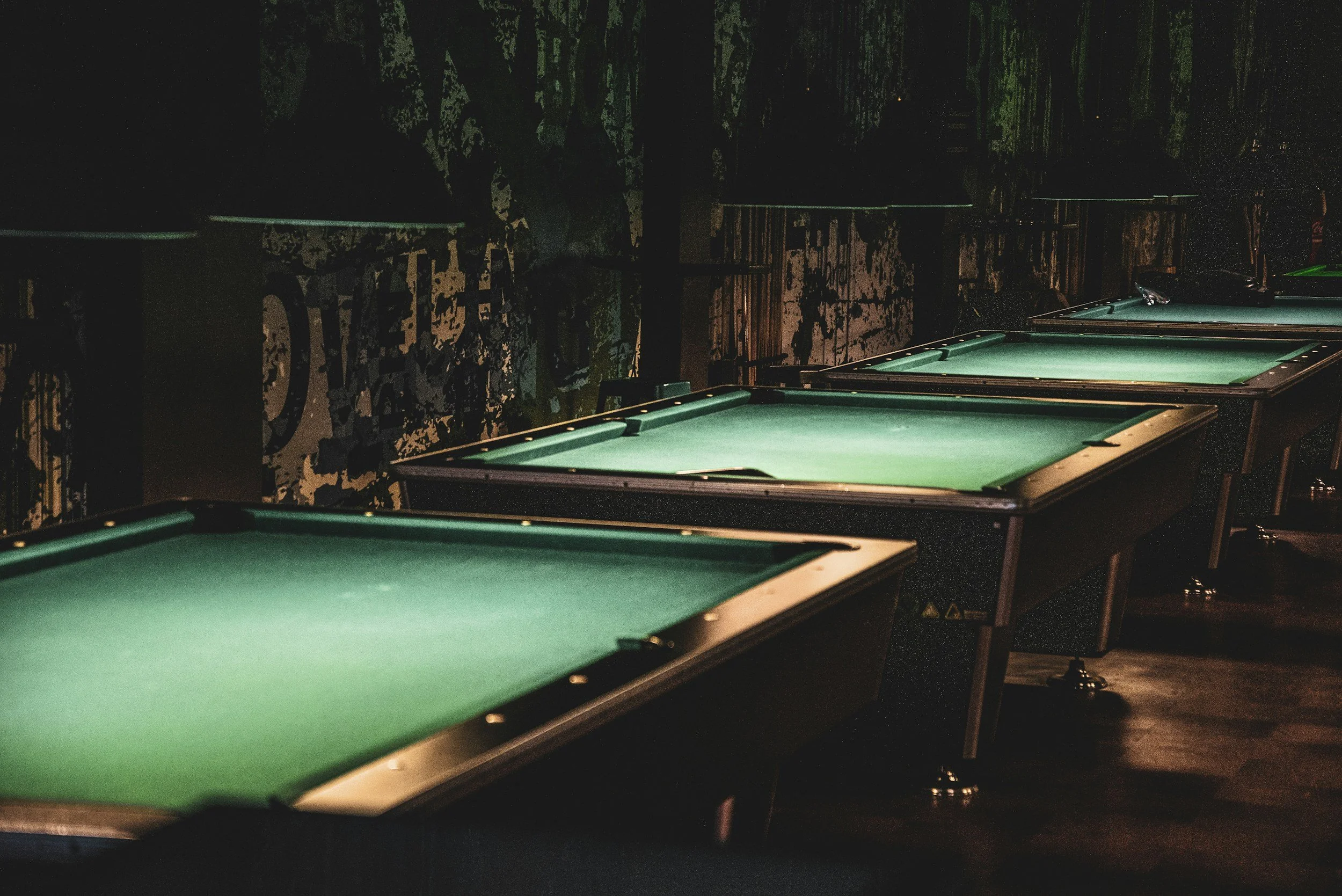
If you plan to play regularly or want a table that lasts, slate is the stronger long-term choice. Non-slate tables can make sense for light, casual use or for spaces where weight is a real constraint. Whichever direction you go, it's worth confirming the bed material before buying, since it affects every service the table will need later.
Pool Tables by Size and Use
Home (Residential) Pool Tables
A home pool table is a slate or non-slate table built for a game room, usually 7, 8, or 9 feet long. The 8-foot size is the most common choice in homes because it balances playability with the room it requires. Home tables come in a wide range of finishes, from traditional carved wood to clean, contemporary designs.
Room size matters more than most people expect. You need space around the table for a full cue stroke on every side. Our pool table size guide walks through the clearances for each table size.
Bar Box Pool Tables
A bar box is a 7-foot pool table built for bars and taverns. The term is used for both coin-operated tables and the 7-foot size class in general. Bar boxes are compact, sturdy, and built to handle heavy use. Many players also choose bar box tables for home game rooms because they fit tighter spaces and match the size used in many local leagues.
Coin-Operated Pool Tables
A coin-operated pool table is a bar box table with a built-in ball return that releases the balls when coins or a card are inserted. Coin-ops are common in bars, restaurants, and recreation centers. Their internal ball-return system adds weight and complexity, which matters when they're moved or serviced.
Tournament and Regulation Pool Tables
A tournament pool table is a 9-foot slate table built to the dimensions used in professional and competitive play. The playing surface on a 9-foot table measures 100 by 50 inches. Tournament tables usually feature thick slate, heavy frames, and tighter pocket specs. They need the largest room of any common table size.
Pool Tables by Game Type
Not every "billiards table" is a pool table. The game a table is built for changes its size, pockets, and cloth.
Snooker Table vs. Pool Table
A snooker table is larger than a pool table, often up to 12 feet long, with smaller, rounded pockets and narrower cushions. Snooker uses smaller balls and requires more precise shot-making. A pool table is usually 7 to 9 feet long, has larger pockets, and uses bigger balls. Snooker tables are much more common in the UK than in the United States, so most American home tables are pool tables.
Carom Billiards Tables
A carom billiards table is a 10-foot table with no pockets at all. It's used for games like three-cushion billiards, where points come from bouncing the cue ball off object balls and cushions. Carom tables often use heated slate and a faster cloth to keep ball speed consistent.
English Pool Tables
An English pool table is a smaller table, typically 6 or 7 feet, built for English 8-ball. It has tighter, rounded pockets and is played with smaller balls than American pool. English tables are common in pubs in the UK and are occasionally found in American homes and bars.
Specialty Pool Table Types
Convertible Dining Pool Tables
A convertible dining pool table, sometimes called a pool table dining table combo, is a pool table with a removable top that turns it into a dining table. These tables are popular in homes where a dedicated game room isn't practical. Many convertible tables use slate beds, so they play like a standard table when the top is off.
The added top means extra weight and an extra step during moves. If you're considering one, check how the top is stored when not in use and whether the table matches your dining height preferences.
Outdoor Pool Tables
An outdoor pool table is built with weather-resistant materials, such as aluminum or treated frames, sealed beds, and outdoor-rated cloth, so it can live on a patio or covered deck. Even weather-resistant tables do better under cover in the Pacific Northwest, where steady rain and humidity are hard on any table. A fitted cover is a smart addition.
Modern and Contemporary Pool Tables
A modern pool table refers to style rather than construction. These tables feature clean lines, metal or minimalist legs, and finishes like white lacquer, glass, or mixed materials. Underneath the design, many modern tables use the same slate beds as traditional tables. When shopping by style, it's still worth confirming the slate thickness and frame construction.
Antique and Vintage Pool Tables
Antique pool tables can be beautiful and often feature slate beds and solid hardwood. Age brings its own considerations, though. Older tables may have worn cushions, loose joints, or slate that needs releveling. Many are well worth restoring, and a refelt along with cushion and bumper work can bring them back to life.
How Table Type Affects Moving, Setup, and Refelting
The type of table you own changes what each service involves:
Slate tables need full disassembly to move, followed by careful leveling and seam filling at the new location.
Convertible and coin-operated tables have extra components, like dining tops and ball-return systems, that add steps to any move.
Larger tables need more cloth, more working room, and sometimes more crew.
Older tables may reveal cushion or frame issues once the felt comes off.
Knowing your table type ahead of time helps you plan realistically. If you're not sure what you have, a few photos and a quick conversation usually clear it up.
Buying a Used Pool Table? What to Check
Many great tables are found secondhand. Before you buy, confirm:
Bed material: Slate or non-slate, and if slate, one piece or three.
Size: The actual playing surface, not just the advertised size.
Condition of the rails and cushions: Dead cushions mean slow, inconsistent bank shots.
Felt condition: Worn or torn cloth can be replaced, but factor it in.
Moving plan: Slate tables need disassembly, so plan the move before you commit.
We also offer previously loved tables and are happy to help you think through a table you're considering elsewhere.
Not Sure What Kind of Table You Have?
Whether you're buying, moving, or restoring a table, we're glad to help you figure out exactly what you're working with. Information is always free.
Call 360-686-9059 or reach out through our contact page.
Frequently Asked Questions
What are the main types of pool tables?
The main types are slate and non-slate tables, sorted further by size (bar box, home, and tournament tables) and by game (pool, snooker, carom, and English pool). Specialty types include convertible dining, outdoor, and coin-operated tables.
What is the most common type of pool table for homes?
A 7- or 8-foot slate pool table is the most common home choice, with 8 feet being the most popular size.
What is the difference between a slate and non-slate pool table?
Slate tables use a stone playing bed that stays flat for decades. Non-slate tables use wood composites or synthetics that are lighter but more likely to warp or sag over time.
What is a bar box pool table?
A bar box is a 7-foot pool table built for bars and heavy use, often coin-operated. Many people also use bar box tables at home because they fit smaller rooms.
What is the difference between a snooker table and a pool table?
Snooker tables are larger, often up to 12 feet, with smaller pockets and smaller balls. Pool tables are typically 7 to 9 feet with larger pockets.
Do convertible dining pool tables play like regular pool tables?
Many do, especially those with slate beds. With the dining top removed, a quality convertible table plays much like a standard table of the same size.
Can outdoor pool tables stay outside year-round?
They're built to handle the elements, but in the Pacific Northwest, covered placement and a fitted cover help them last much longer.