Pool Table Felt Replacement: When and Why
The felt (or cloth) on your pool table takes more abuse than almost any other part of it. Every shot, every break, every ball rolled across the surface wears on it a little more, and over time that wear starts to show. This guide covers how to tell when it's time for pool table felt replacement, what actually causes the wear, and what the process looks like once you decide to move forward.
What Pool Table Felt Actually Does
The cloth covering your table isn't just about appearance. It's what gives the table its speed, its roll, and its overall feel. A worn or damaged cloth changes how balls travel across the surface, which affects play even if the table itself is in good structural shape. That's why felt replacement, sometimes called recovering or refelting, is one of the more common services a table ends up needing over its lifetime.
Signs It's Time for Felt Replacement
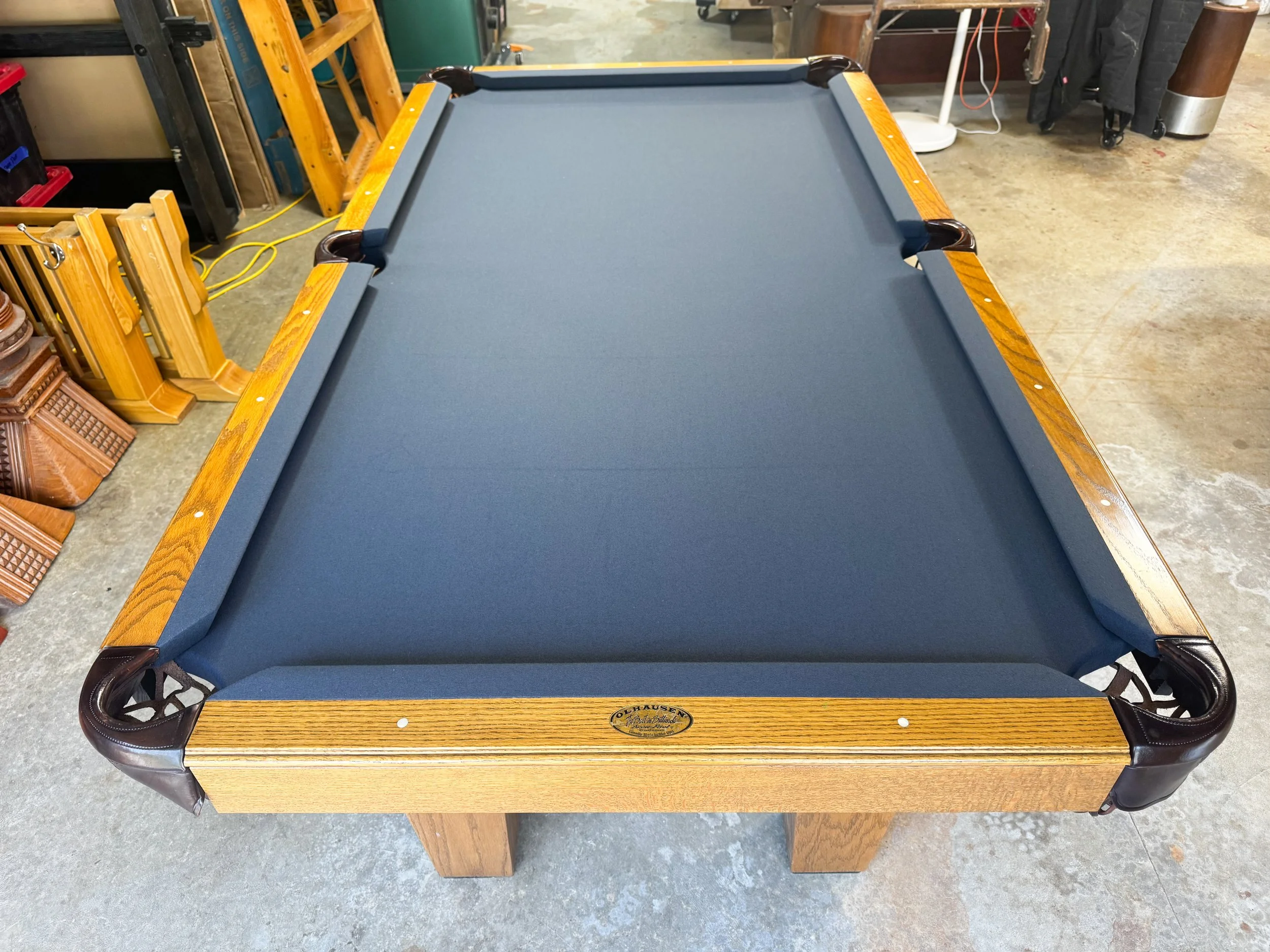
A few common indicators that your cloth has reached the end of its life:
Visible wear in high traffic areas. The head spot, the break zone, and the areas near the rails tend to wear faster than the rest of the table, since that's where the cue ball and break shots see the most contact. Thin or fuzzy patches in these spots are a clear sign.
Fading or discoloration. Sun exposure and general age can shift the color of your cloth over time, especially near windows or in rooms with a lot of natural light.
Inconsistent ball roll. If balls seem to drag in certain spots or roll differently depending on where they are on the table, worn or matted cloth fibers are often the cause.
Rips, snags, or burn marks. Physical damage is the most obvious sign, and it's not something that improves with time.
A general "off" feel to the game. Sometimes it's less about a specific visible problem and more that the table just doesn't play the way it used to. That's often cloth related.
Wanting a different look. Not every felt replacement is about wear. Plenty of owners simply want to change the color to match a remodeled room or refresh the look of the table.
How Often Does Pool Table Felt Need to Be Replaced?
There's no fixed timeline, since it depends heavily on how often the table gets played, the grade of cloth installed, and the environment it lives in. A table that sees regular use in a busy household or a business setting wears through cloth faster than one that gets occasional weekend games. Cloth quality matters too. Higher grade cloth tends to hold its speed, color, and durability longer than lower grade options, even under similar use.
What's Involved in a Felt Replacement
The process is more detailed than it might look from the outside:
Rail removal. The rails come off the table to access the cloth underneath.
Old cloth removal. The existing felt is stripped from both the bed and the rails.
New cloth installation on the bed. New cloth is cut to size and stretched tight across the slate, since a properly tensioned cloth is part of what makes the table play consistently.
New cloth on the rails. The rails get their own fresh cloth to match.
Reassembly. The rails are reattached and squared back onto the table.
Since the rails and cloth are already off during this process, it's also a natural point to check and adjust slate leveling if needed, rather than scheduling that as a separate visit.
Choosing Your Cloth
Cloth comes in a range of colors and grades, and the right choice depends on your priorities. Some owners want a cloth that holds up under heavy, regular play. Others are more focused on matching a specific room color or getting a particular look. It's worth talking through your options before committing, since the grade of cloth you choose affects how long it holds up and how the table plays over time.
Timing It With Other Services
If your table is due for a move or a setup, that's often a convenient time to handle a felt replacement as well, since the rails are already coming off as part of the other work. Combining services in a single visit is typically more efficient than scheduling separate appointments for each one. The same goes if your cushions or rails need attention. Rail work has to happen before new cloth goes on, so it's worth addressing both at once if you know your rails need repair.
Get in Touch
If you're noticing worn cloth, inconsistent roll, or you're just ready for a new look on your table, reach out and describe what you're seeing. We'll help you figure out whether it's time for a felt replacement and what your options look like.
Call 360-686-9059 or reach out through our contact page to get started.
FAQs
What's the difference between felt replacement, recovering, and refelting?
Nothing. These terms all describe the same service: removing the old cloth and installing new cloth on the bed and rails.
How do I know if my cloth needs to be replaced or just cleaned?
Fading, thinning, rips, or an inconsistent ball roll usually point to a cloth that needs replacing rather than cleaning. If you're not sure, a quick look at the table can usually settle it.
Can I change the color of my cloth even if the old one isn't worn out?
Yes. Plenty of felt replacements happen because an owner wants a different look, not because the old cloth failed.
Does felt replacement fix an uneven table?
Sometimes. Since the rails come off during the process, it's a convenient time to check and adjust slate leveling if that's contributing to the issue.
Should I replace my cloth before or after a move?
Either can work, but combining a felt replacement with a move or setup is usually more efficient than scheduling it separately, since the table is already partially disassembled.