What Size Pool Table Should I Get?
Choosing a pool table size is one of the first decisions you'll make, and it matters more than people expect. Get it right and the table fits naturally into the room with plenty of space to shoot every angle. Get it wrong and you're stuck bridging off the wall on half your shots. Here's what to know before you decide.
Standard Pool Table Sizes
Pool tables are measured by the distance between the inside cushion noses, not the outer frame. The four sizes you'll run into most often:
| Table Size | Playing Surface | Common Use |
|---|---|---|
| 7 foot | 78" x 39" | Bar and pub tables, smaller home rooms |
| 8 foot | 88" x 44" | The most common size for home game rooms |
| 8 foot oversized (Pro 8) | 92" x 46" | A middle ground between 8 and 9 foot tables |
| 9 foot | 100" x 50" | Regulation tournament and league size |
Seven foot tables are what you'll typically see in bars, and they're a practical choice for smaller rooms or basements with limited square footage. Eight foot tables are the most common size for home use, offering a good balance between playability and the amount of room they require. Nine foot tables are the regulation size used in tournaments and most competitive league play, and they need considerably more clearance around them.
How Much Room You Actually Need
This is where a lot of buying decisions go wrong. The table itself is only part of the equation. What matters just as much is the clearance around it, since a standard cue is 57 to 58 inches long and you need room to draw it back for a full stroke without hitting a wall.
The general rule of thumb is at least 5 feet of clearance on all sides of the table, which allows for a full, comfortable stroke from any position around the table. That means the actual room size needed is significantly larger than the table's footprint:
| Table Size | Minimum Recommended Room (5 ft clearance) |
|---|---|
| 7 foot | 13'2" x 16'2" |
| 8 foot | 13'8" x 16'8" |
| 8 foot oversized | 14' x 17' |
| 9 foot | 14'8" x 18'2" |
If your room is tighter than these numbers, it doesn't necessarily rule out a table, but it does mean some shots will require a shorter bridge cue, and it's worth measuring carefully before committing to a size.
Choosing the Right Size for Your Space
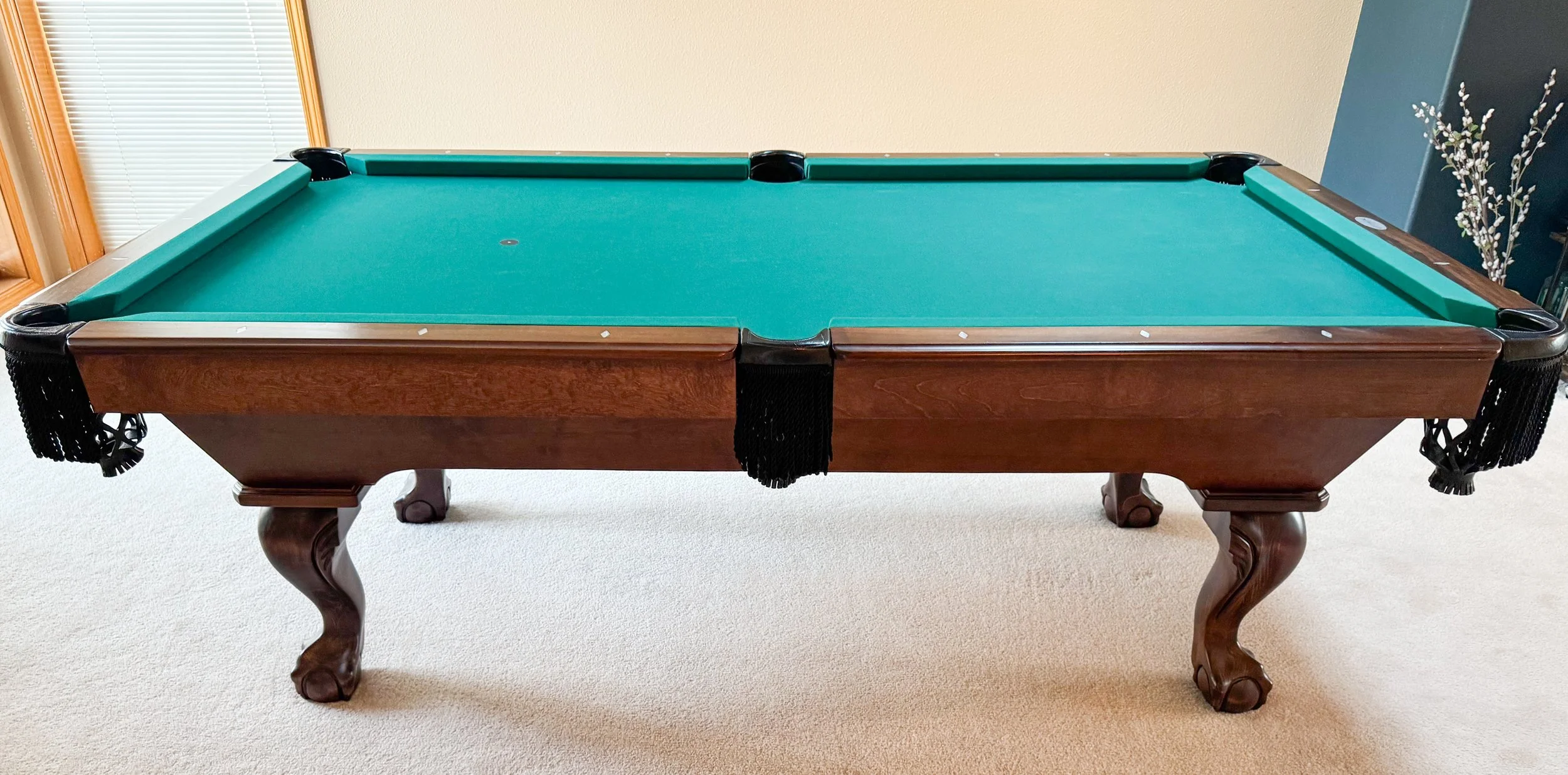
Measure the room first, not the table. Before deciding on a size, measure your actual room and compare it against the clearance numbers above. It's the single most useful thing you can do before buying.
Think about how the table will be used. A family room table that sees casual, relaxed play doesn't need to meet regulation specs. If you or your household play seriously, want to practice for league play, or just prefer the way a bigger table plays, a 9 foot regulation table is worth the extra room if you have it.
Account for furniture and walkways. If the room also holds other furniture, a bar area, or serves double duty as a living space, factor that into your clearance math. A table that technically fits with 5 feet of clearance on paper can still feel tight if a couch or doorway eats into that space.
Don't forget the ceiling. Cue elevation for certain shots requires some vertical room too, though this is rarely an issue outside of unusually low basement ceilings.
Consider table style alongside size. Slate quality, frame construction, and finish all affect how the table plays and holds up over time, and they're worth thinking through alongside the size decision itself.
When an 8 Foot Table Makes Sense
For most home game rooms, an 8 foot table hits the balance point. It plays close to a full size game, fits in a wide range of standard room sizes, and works well for both casual and semi-serious players. It's the size we see most often in home installations.
When a 9 Foot Table Makes Sense
If you have the room and want the regulation experience, whether for league play, serious practice, or simply preferring how a full size table plays, a 9 foot table delivers that. It requires meaningfully more clearance, so it's worth confirming your room measures up before making the commitment.
When a 7 Foot Table Makes Sense
Smaller rooms, finished basements with limited square footage, or spaces meant for casual, social play are all good fits for a 7 foot table. It's also the standard size for most bar and pub style tables.
Already Have a Table and Need It Sized Up or Moved?
If you're upgrading to a different size table, or need your current table professionally moved or set up once you've settled on a size, that's exactly what we handle. Take a look at the tables we have available, or if you've already got a table picked out and need it delivered and installed, our setup service covers everything from leveling the slate to squaring the rails so it plays right from day one.
Get in Touch
Not sure which size fits your space, or want a second opinion before you buy? Share your room dimensions and we'll help you figure out what actually fits and plays well.
Call 360-686-9059 or reach out through our contact page to get started.
FAQs
What's the most common pool table size for a home?
An 8 foot table is the most common choice for home game rooms, offering a practical balance between playability and space requirements.
How much clearance do I need around a pool table?
At least 5 feet on all sides is the general guideline, which allows for a full cue stroke from any position around the table.
Is a 9 foot table too big for a home?
Not necessarily, but it requires significantly more room than an 8 foot table. Measuring your space against the clearance chart above is the best way to know for sure.
What size is a bar or pub pool table?
Most bar tables are 7 foot tables, which is also a practical size for smaller home rooms.
Can I still fit a table if my room is a little tight on clearance?
In some cases, yes, though tighter clearance may mean using a shorter bridge cue for certain shots. It's worth measuring carefully and talking through your specific room before deciding.