Pool Table Moving Cost: What to Expect
"How much does it cost to move a pool table?" is one of the most common questions we hear, and it's also one of the hardest to answer with a single number. Pool tables aren't standard furniture. They come apart into individual pieces, involve real weight and precision, and every move has its own set of variables.
This guide walks through what actually goes into the cost of a professional pool table move, so you know what to expect before you request a quote.
Why There's No Flat Rate
A move across town in a single story house looks nothing like a move involving a flight of stairs, a long carry from the driveway, or a tournament style table with extra hardware. Because of that, pricing is built around the specifics of your move rather than a one size fits all number. The good news is that most residential moves fall into a fairly predictable range, and the factors that shift the price are easy to understand ahead of time.
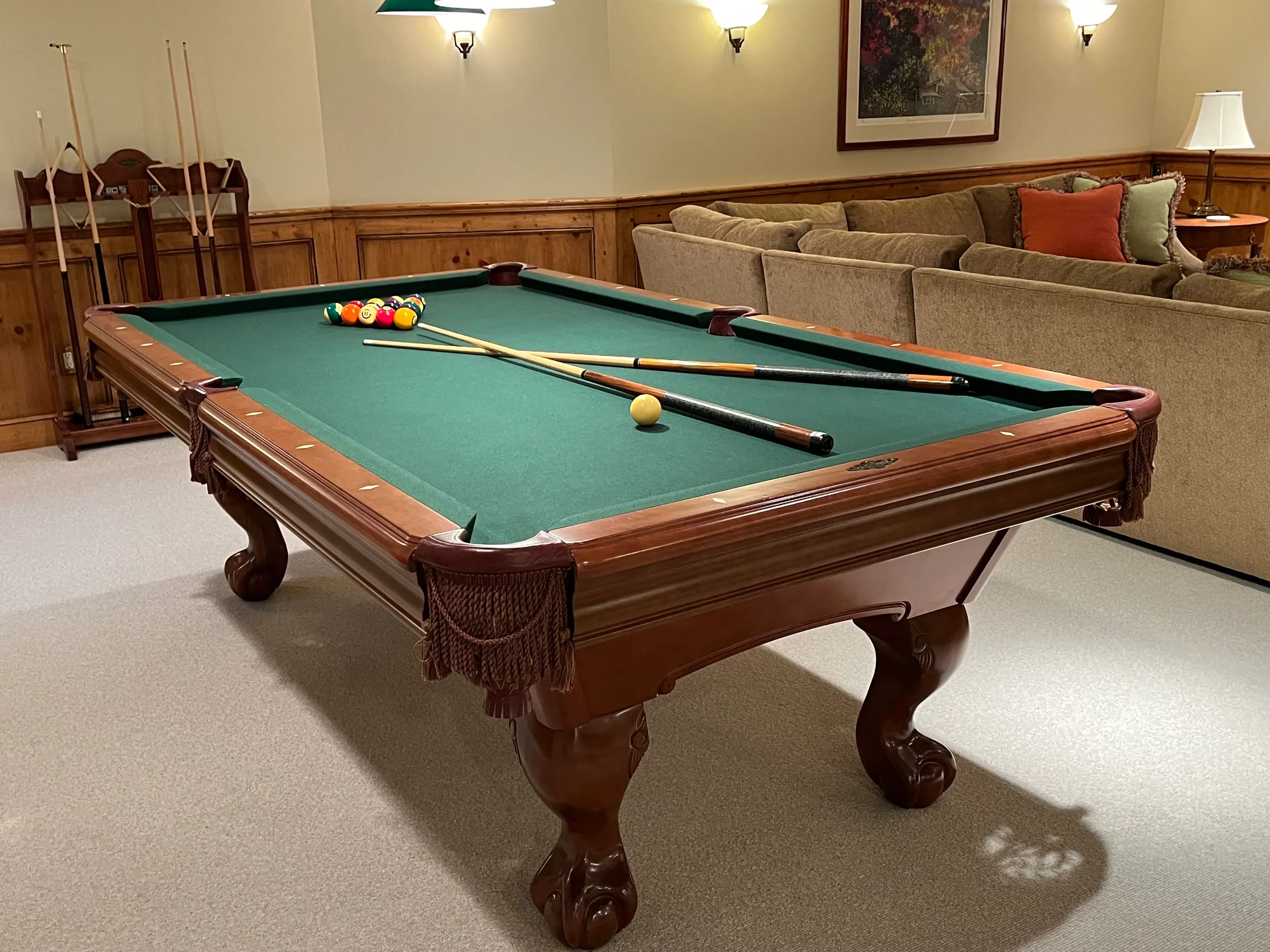
What Affects the Cost of a Pool Table Move
Distance. A move within the same neighborhood is a different job than a move across town or into a different city. Travel time factors into every quote.
Access at both locations. Stairs, narrow hallways, tight doorways, and long carries from the driveway all add time and labor. A move where the table sits right off the garage is quicker than one where it needs to come down two flights of stairs and around a corner.
Table type. Furniture style tables are generally the most straightforward to move. Tournament style tables have more hardware and stricter tolerances, which adds time to both teardown and reassembly. Coin operated tables move as a single unit rather than breaking apart, which changes the approach entirely.
Table condition and age. Older or antique tables sometimes require extra care during disassembly, and that can affect the time involved.
Bundled services. If you're combining the move with a refelt or a repair, the total cost reflects everything being done, but bundling almost always costs less than scheduling those as separate visits later, since the table is already apart.
Slate condition. Most moves include releveling the slate at the new location as a standard part of the job. If the slate needs more significant work, such as an uneven base at the new location, that can extend the time on-site.
What a Professional Move Actually Includes
Understanding what happens during a move helps explain where the cost comes from. A typical move breaks down into three phases:
Teardown. The rails come off, the cloth is protected or carefully removed, and the slate is separated into its individual pieces. This usually takes 30 to 40 minutes.
Transport. Every piece, especially the slate, gets wrapped and padded for the drive. Slate is heavy but can chip or crack at the edges if it isn't handled correctly, so this step matters more than it might seem.
Reassembly. At the new location, the frame goes back together, the slate is reset and releveled, the cloth is reattached, and the rails are remounted and squared. Reassembly typically takes 90 minutes to 2 hours.
Start to finish, a straightforward move usually runs about 3 to 4 hours once you account for drive time in between. That number moves up or down based on the factors above.
Why Professional Moving Matters
Pool tables are heavier and more precisely engineered than most furniture, and the margin for error is small. A slate that gets chipped during a move, or reassembled without careful leveling, can affect how the table plays for years afterward. Moving a table safely takes the right tools, the right technique for handling slate, and an understanding of how each component fits back together. It's a job that rewards experience, which is part of why most owners choose to have it handled by someone who does it regularly rather than piecing it together on move day.
What to Do With Your Existing Cloth
One thing that surprises people: your cloth doesn't need to be replaced just because the table is being moved. If it's in decent shape, it can typically be removed carefully during teardown and reinstalled at the new location, no extra cost for new material. If the cloth is already worn or you've been thinking about a color change, a move is a convenient and cost effective time to combine it with a refelt, since the table is already partially disassembled.
Getting an Accurate Quote
The fastest way to get a real number for your move is to share a few details up front:
Where the table is moving from and to (including whether stairs are involved at either end)
The table type, if you know it (furniture style, tournament, coin operated, or antique)
Whether the cloth needs to be replaced or reused
Any other work you're considering, like a repair or a bumper replacement
With those details, we can walk you through what to expect for your specific move rather than a generic estimate that may not reflect your situation.
Get in Touch
If you're planning a move and want a clear picture of cost before you commit to anything, reach out and describe your setup. We'll walk you through the process and what it looks like for your table.
Call 360-686-9059 or reach out through our contact page to get started.
FAQs
Is there a standard price for moving a pool table?
Not a flat rate, no. Most straightforward moves fall into a predictable range, but distance, access, and table type all factor into the final number.
Does moving my table mean I need new cloth?
No. If your current cloth is in good shape, it can usually be removed carefully and reinstalled at the new location.
Does it cost more to move a tournament style table?
Generally yes. Tournament tables have more hardware and stricter tolerances, which adds time to teardown and reassembly.
Can I get a quote without an in-home visit?
In many cases, yes, based on details like table type, distance, and access. Some situations benefit from a closer look before finalizing a number.
Is it worth combining a move with other services, like a refelt?
Usually. Bundling services in the same visit is typically more efficient than scheduling separate appointments later, since the table is already apart.